
ACTIVE AGING • STRENGTH & MOBILITY
Resistance Band Exercises for Adults Over 60
Build strength, support balance, improve mobility, and make everyday
activities easier with simple resistance band exercises designed with
active aging in mind.
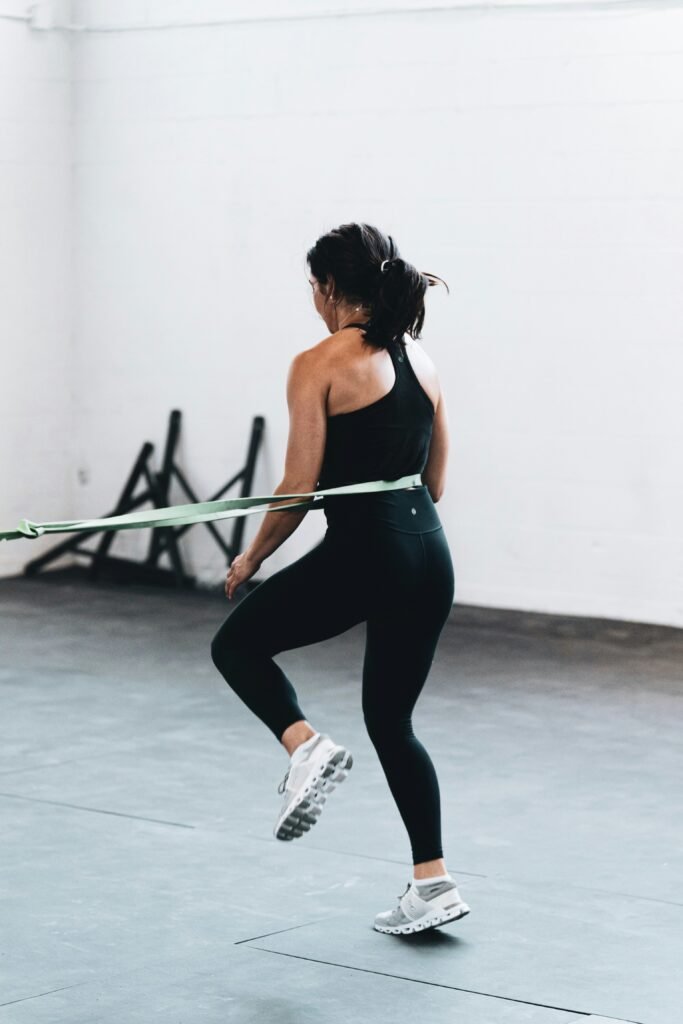
Resistance bands are one of the most versatile strength-training
tools for adults over 60. They are lightweight, inexpensive,
portable, and can provide resistance without requiring heavy weights or
complicated gym equipment. Used consistently, resistance training can
help you maintain the strength and independence that support an active
lifestyle.
As we age, maintaining muscle strength becomes increasingly important.
Stronger legs can make stairs and getting out of a chair easier. Stronger
back and shoulder muscles can support posture. A stronger core can help
with everyday movement and stability.
The good news is that you don’t need to lift extremely heavy weights to
get started. Resistance bands allow you to begin gently and gradually
increase the challenge as your strength improves.
Why Use Resistance Bands After 60?
A well-designed resistance band routine can complement walking,
Tai Chi, swimming, Pilates, and other forms of active aging.
Build Muscle
Resistance exercises challenge your muscles and can help maintain
strength as you get older.
Support Independence
Stronger muscles can make everyday activities such as standing,
lifting, carrying and climbing stairs easier.
Improve Mobility
Strengthening muscles around the hips, shoulders and core can
complement mobility and flexibility work.
Easy to Use
Bands are light, portable and suitable for home workouts,
travel or a gym routine.
8 Resistance Band Exercises for Adults Over 60
Start with a light band and focus on slow, controlled movements.
Quality is more important than the amount of resistance.

UPPER BODY
1. Seated Resistance Band Row
This exercise works the upper back and supports better
shoulder posture.
How to do it
- Sit tall in a sturdy chair.
- Place the band around your feet.
- Hold one end in each hand.
- Pull your elbows gently backward.
- Slowly return to the starting position.
Start: 8–12 repetitions.

ARMS & SHOULDERS
2. Resistance Band Biceps Curl
Biceps curls strengthen muscles used when lifting and
carrying everyday objects.
How to do it
- Stand or sit with your back straight.
- Place the band underneath your feet.
- Hold the handles or ends of the band.
- Bend your elbows and curl your hands upward.
- Lower slowly.
Start: 8–12 repetitions.

LEGS
3. Seated Leg Press
A gentle seated band exercise that targets the muscles
involved in pushing and standing.
How to do it
- Sit toward the front of a sturdy chair.
- Loop the band around one foot.
- Hold the other end securely.
- Slowly straighten your leg.
- Return with control.
Start: 8–10 repetitions per leg.

SHOULDERS
4. Band Pull-Apart
This simple movement works the upper back and rear shoulder
muscles.
How to do it
- Hold the band in both hands at chest height.
- Keep your arms comfortably extended.
- Pull your hands apart.
- Squeeze your shoulder blades gently.
- Return slowly.
Start: 8–12 repetitions.

CHEST
5. Resistance Band Chest Press
Strengthen your chest, shoulders and arms using a controlled
pressing movement.
How to do it
- Secure the band behind you at a safe anchor point.
- Hold the band handles at chest level.
- Press your hands forward.
- Avoid locking your elbows.
- Return slowly.
Start: 8–10 repetitions.

LEGS & HIPS
6. Seated Hip Abduction
Strengthen the muscles around your hips and outer thighs.
How to do it
- Sit upright in a sturdy chair.
- Place a loop band around your thighs.
- Keep your feet comfortably apart.
- Gently press your knees outward.
- Return slowly.
Start: 10–15 repetitions.

UPPER BODY
7. Band Shoulder External Rotation
A light resistance exercise that targets the muscles supporting
the shoulder.
How to do it
- Keep your elbow close to your side.
- Hold the band with your forearm across your body.
- Rotate your hand outward.
- Move only as far as comfortable.
- Return slowly.
Start: 8–10 repetitions per side.
CORE & POSTURE
8. Standing Band Anti-Rotation
A gentle core exercise that challenges your ability to
resist unwanted rotation.
How to do it
- Secure the band at about chest height.
- Stand sideways to the anchor.
- Hold the band with both hands.
- Move your hands forward.
- Keep your torso facing forward.
Start: 6–10 repetitions per side.
A Simple 20-Minute Resistance Band Routine
You don’t need a long workout to get started. Try this simple
sequence two or three times per week, allowing your muscles time
to recover between strength-training sessions.
3–5 minutes of easy walking or gentle mobility exercises.
8–12 controlled repetitions.
8–12 controlled repetitions.
10–15 repetitions.
8–10 repetitions per leg.
8–12 repetitions.
3–5 minutes of relaxed stretching and breathing.
How to Progress Safely
The goal isn’t to use the strongest band possible. The goal is to
gradually become stronger while maintaining excellent control.
Step 1 — Start Light
Begin with a resistance level that allows you to complete
approximately 8–12 repetitions with good technique.
Step 2 — Improve Control
Slow down the movement rather than immediately reaching for
a heavier band.
Step 3 — Add Repetitions
When the exercise becomes comfortable, gradually work toward
the upper end of your repetition range.
Step 4 — Increase Resistance
Once you can perform the exercise comfortably, consider moving
to the next resistance level.
Resistance Band Safety for Adults Over 60
Resistance bands are generally simple to use, but technique and
equipment safety matter.
- Inspect the band.
Check for cracks, tears or signs of deterioration before each use. - Start with low resistance.
You can always increase resistance later. - Use slow movements.
Avoid snapping or jerking the band. - Secure anchors carefully.
If you attach a band to a door or anchor point, make sure it is
specifically designed for resistance bands and securely positioned. - Keep breathing.
Avoid holding your breath during resistance exercises. - Stop if something feels wrong.
Sharp pain, significant dizziness, unusual shortness of breath
or other concerning symptoms are reasons to stop and seek
appropriate medical advice.
If you have a medical condition, recent surgery, significant mobility
limitations, or are recovering from an injury or neurological event,
consider asking your healthcare professional or physiotherapist
which resistance exercises are appropriate for you.
Which Resistance Band Should You Choose?
There are several types of resistance bands, and each can work well
for different exercises.
Flat Bands
Simple and versatile. They work particularly well for mobility
and upper-body exercises.
Loop Bands
Useful for exercises involving the hips, thighs and legs.
Tube Bands
Often equipped with handles, making them convenient for rows,
curls and pressing exercises.
Light Resistance
Often the best starting point for beginners. Choose control and
comfort over heavy resistance.
Frequently Asked Questions
How often should adults over 60 use resistance bands?
A practical starting point is two or three strength-training
sessions per week, with recovery time between sessions. Your
ideal schedule depends on your fitness level and overall health.
Are resistance bands better than weights?
Neither is automatically better. Resistance bands provide a
convenient and versatile way to train, while dumbbells and other
weights offer different resistance characteristics. Many people
benefit from using both.
Can beginners use resistance bands?
Absolutely. Beginners can start with a light band and a small
number of repetitions, concentrating on controlled movement and
proper technique.
Can resistance bands help with balance?
Strengthening the legs, hips and core can support the physical
abilities involved in balance. However, resistance-band exercises
should complement rather than replace dedicated balance training.
Can I exercise with resistance bands while seated?
Yes. Many resistance-band exercises can be performed from a
sturdy chair. Seated exercise can be a useful option for people
who are building strength or who have difficulty exercising
while standing.
Make Strength Part of Active Aging
Resistance bands can turn a small space at home into an effective
strength-training area. Start gently, focus on good technique and
progress gradually. Combined with walking, mobility work, balance
training and healthy nutrition, strength training can become an
important part of an active lifestyle after 60.